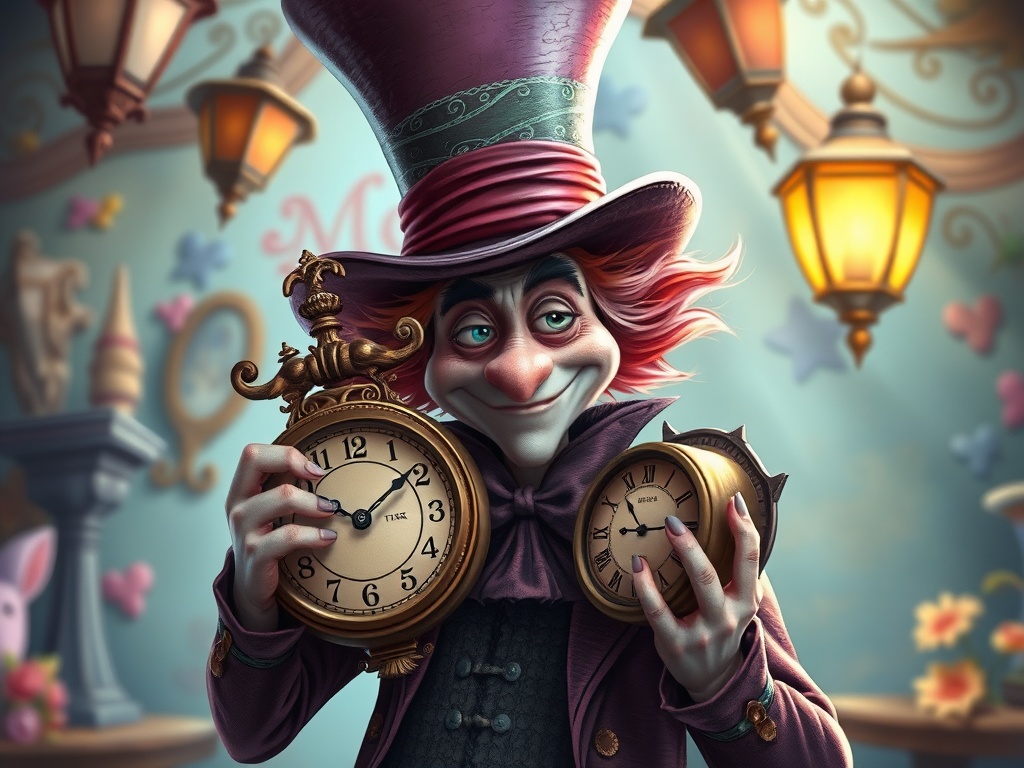
We rush, never seeming to have enough time in our days. If we aren’t occupied with an ever-growing to-do list, it can feel as if we aren’t accomplishing anything. Time ticks by as we stare at screens. Taking a phone call or traveling for a work meeting can also mean you’ve missed an important event. Or worse, we lose or kill time as we clear a few more levels in Candy Crush just to rush around to make it up later.

First, I think of the stoic philosopher Seneca the Younger, a favorite quote of mine,
“You live as if you were destined to live forever, no thought of frailty ever enters your head, of how much time has already gone by, you take no heed. You squander time as if you drew from a full and abundant supply, though all the while that day which you bestow on some person or thing is perhaps your last.” (Seneca)
Then I glance up at the advice Robert Greene gave Ryan Holiday,
“He told me there are two types of time: alive time and dead time. One is when you sit around, when you wait until things happen to you. The other is when you are in control, when you make every second count, when you are learning and improving and growing. Which one will you choose?” (Holiday).
I keep it on the wall beside my writing desk. A great blog article can be found here: https://dailystoic.com/alive-time-or-dead-time-what-will-it-be/
These reflections bring me back 10 years to a construction site where the owner of DC Building scrawled,
“Lost time is never found… DON’T WASTE IT”
on the inside of the tool trailer door for all to see. The years I spent on that project taught me more about efficiency than construction.
My own relationship with time is complicated by more than a decade lost to drugs and alcohol. I catch myself packing my days so full that I can’t stand it as if I’m paying off some temporal debt to the universe. As if I must live with double the effort and meaning now because I squandered so much in hedonistic pursuits. Continually reminding myself that the time wasn’t lost, it was a learning experience that already adds meaning to my present.
I don’t like sitting still. Doing nothing is either a deliberate act or a response to exhaustion. The thoughts normally go something like this:
I need to take a break for a bit.
I’ll eat lunch and watch a quick show on Netflix.
Then back to it.
I rarely make it through a half-hour show. I eat while I cook, never pausing to taste the food or really watch the TV. I often just listen to podcasts during this time to make it more efficient. About 15 minutes after my “break,” I’m back on task.
I rarely make it through a half-hour show. I eat while I cook, never pausing to taste the food or really watch the TV. I often just listen to podcasts during this time to make it more efficient. About 15 minutes after my “break,” I’m back on task.
Time Related Rules I Live By

I get annoyed waiting on people; if you are 5 minutes early, you’re 10 minutes late. If you tell me you’re going to show up at a specific time and are late, it’s YOUR character flaw and means you don’t respect me.
It’s totally fine if I have to wait because I show up early, though. I take advantage of that time with quick meditation or reading the book I’ve kept handy.
I don’t set casual meeting times; “around 5” or “this evening” doesn’t fly. I demand a time or don’t schedule the meeting.
I have very little patience for indecision; I set my meals, clothing, and brands so I can avoid decision fatigue and the lost time it brings. When I don’t know what to wear, say, for an appointment. I’ll add 10 minutes to the mental clock I’m rushing against.
I’ll plan to try a new dish out on Saturday. I make that plan Monday morning.
People don’t seem to understand why I’m always operating with a baseline level of stress, and I don’t seem to understand why everyone else isn’t. It’s not maintainable, it’s not healthy in my relationships, and it needs to change.
What to do about it.
I’ve read and applied philosophical texts to anger issues with some success in the past; I figured I should apply the same framework to my relationship with Time. I’ve read a bunch of nonfiction on how to get more out of my days, such as Cal Newport’s Deep Work, a fantastic book about using time as a tool. I wanted to understand my relationship with time better, not so much how to utilize it. So, I started with Eva Hoffman’s aptly named Time. A philosophical exploration of time and the body, the mind, its cultural significances, and the last chapter, Time In Our Time.
Towards the end of the book, but a good beginning for a blog series, I found an interesting passage about the Greek deity Chronos. It reads, “…trying to achieve temporal omnipotence is a losing game. In Greek mythology, Chronos is the first of all the gods, creating order out of chaos but capable also of eating his own children.” (Hoffman). This seems like a great lesson: time can consume your children’s childhood before you realize it’s gone, as you toil away your life in worldly pursuits. The moral of the story carries an air of ancient wisdom.
First things first, let’s go to Google! I found a ton of conflicting information from secondary sources, none of which satisfied my curiosity. So I decided my first mission was to sort out the origin story of Father Time. If Chronos created chronological time out of primordial chaos, “Father Time” is as good a moniker to hang on him as any.
According to Wikipedia, Eva Hoffman holds a Ph.D. from Harvard in American Literature, has written several books, and has an impressive academic career. There was no notation besides her entry about Chronos, so nothing came up in the note section either. I’m just going to assume the handful of sentences dedicated to him in passing we’re either decided to be common knowledge, or added effort wasn’t spent, because Chronos really isn’t the subject of the chapter or a main theme in the book. I’ll have to satisfy my own curiosity.
I came across conflicting names: Cronus, Chronos, Kronos. Then, different versions of the origin story than Dr Hoffman’s. Some articles state there were totally different gods with similar names. The pantheon of Greek gods is already confusing enough, and then I found Roman mythology mixed in as well. It can get out there. I decided to step away from general Google searches and log in to my ASU library pass. Hoping scholarly sources will help me sort this out a little better.

What I found first was an explanation of why things were so fragmented and mixed up. For one, Chronos had no real religious following. Maybe a small cult here and there, but for the most part, he wasn’t a routinely worshipped deity, so there’s not a ton of information in writing about him that survived.
I also found a quote from the guy who questioned everything to a point that relentlessly questioning things is now called the Socratic Method. Socrates had this to say about the pantheons in general,
“Now, whether there is one Aphrodite or two, Celestial and Popular, I do not know; even Zeus, though considered one and the same, yet has many names.” (Xenophon).
That doesn’t strike me as a question. That is more of a palms up, shoulders shrugged, resignation from a great mind with significantly more contemporary context than me.
WHAT AM I GETTING MYSELF INTO?
Enter ’Interpretatio Romana’
“…a phrase used to describe the Roman habit of replacing the name of a foreign deity with that of a Roman deity considered somehow comparable.” (Rives).
There is no definitive summary or hierarchy of the gods. As the Romans traveled, conquering and incorporating other Mediterranean cultures into their empire, they absorbed them into their own. Similar gods were joined together; be it similar by spelling, imagined appearance, ability, or anything goes as long as it goes together.
Most of these cultures shared a common ethnicity and pagan pantheons, so it was probably the path of least resistance to see how they fit together. Someone had to be mostly right… Right?

Back To Our Protagonist
In a drama-filled story fit for modern reality television, Chronos was not only powerful and knowing enough to create order out of chaos, but he also consumed his own children. I’ve decided to refer to him as Chronos from here on, so we’re all on the same page as I piece together the story from multiple sources.
Chronos was the last of the 12 Titan children of Uranus (Sky God) and Gaia (Earth Goddess). Uranus hated his children and banished them to a particularly nasty section of the underworld called Tartarus, causing Gaia to have her last child in secret. The plot to overthrow Uranus ended with Chronos castrating his father with a sickle and throwing his dismembered member into the sea, thereby creating more deities. He then freed his brothers and sisters, and they saw him as their leader.
A prophecy foretells that Chronos will suffer the same fate as his father, at the hands of one of his own children. To prevent this, he ate his children as his wife, Rhea, gave birth to them. These children are the pantheon of gods we’re familiar with from Disney’s “Hercules.” Rhea, to save her youngest child, tricked Chronos by swaddling a baby-sized stone, which an unwitting Chronos consumes, believing it was Zeus.
As Zeus grew, he and Thea plotted to free his siblings. When Zeus reached adulthood, he castrated his father and forced him to vomit up his family. (Encyclopedia of Time).

We Have Some Time For More Back And Forth
In Mitoloji Sözlüğü (Mythology Dictionary) Azra Erhat makes a point on the etymology of Cronus, stating that the name Cronus is not connected to the Greek word chronos (χρόνος), which means “time”. This challenges a common interpretation found in later Greek myths and among contemporary scholars.
I found no sources in my research that connected the deity to “creating chronological time from chaos.”
Plutarch used examples from Cicero’s writing, where he writes of Cronus and Chronos as equals by extension. He begins to reference Cronus as the father of time.
Cicero wrote, “By Saturn, again they denoted that being who maintains the course and revolution of seasons and periods of time, the deity actually so designated in Greek, for Saturn’s Greek name is Kronos, which is the same as Chronos, a space of time. The Latin designation ‘Saturn’, on the other hand, is due to the fact that he is ‘saturated’ or satiated with years” (Cicero).
Later Greeks then begin to read Cronus as Chronos, and it become Father Time and the sickle at some point. They also depicted him with a crow, which was an oracle understood to house the soul of a king after sacrifice. (Graves)
Approximate Time & Dates For Some Of These References
Plutarch was alive from approx. 46 to 120 CE.
Cicero lived from 106 to 43 BCE.
Socrates was executed in 399 BCE.
Some of the earliest written evidence of Cronus appeared in the 6th and 7th centuries also in Pindar’s poetry around 500 BCE.
In Conclusion
In summary, it’s no wonder we have a complicated relationship with time. It has been a mess from the start… a long time ago. Some of our oldest gods, most renouned philosophers and poets can make sense of it. It seems that if you don’t get your time management under control, it can not only consume your life and your children, but it can also compromise your decision-making and sanity. It will make you jealous and paranoid, or at the very least it will definitely add chaos to your sense of chronological time.
Time has implications in our day-to-day life, but also spreads out in cyclical [attention over longer spans. Does it repeat itself? Who are we in relation to it? Is there an overall story arc or outline that we’re following? Do we go through the same patterns as other mammals, trees, and civilizations? Why can’t I go to the gym AND make it to work on time?
I’m going to explore time, with you, topic by topic, that I find interesting and hopefully find some greater depth and understanding of my, our, relationship with it.
If there’s anything in particular, you’d like me to explore, research, or write about, post below. Also, feel free to leave feedback!
Bibliography
- Cicero. De Natura Deorum. Translated by H. Rackham, Harvard University Press, 1933.
- Erhat, Azra. Mitoloji Sözlüğü. Remzi Kitabevi, 1984.
- Graves, Robert. The Greek Myths. Penguin Books, 1955.
- Hoffman, Eva. Time: A Philosophical Exploration. Basic Books, 2009.
- Holiday, Ryan. The Obstacle Is the Way: The Timeless Art of Turning Trials into Triumph. Penguin, 2014.
- Rives, James. “Interpretatio Romana.” A Companion to Roman Religion, edited by Jörg Rüpke, Wiley-Blackwell, 2007, pp. 210-225.
- Seneca the Younger. On the Shortness of Life. Translated by C.D.N. Costa, Penguin Classics, 1997.
- Xenophon. Memorabilia. Translated by E.C. Marchant, Harvard University Press, 1923.
- Encyclopedia of Time. Edited by Samuel L. Macey, Facts on File, 2006.
Leave a Reply